



Prasat Phanom Rung, a little history
Perched on an ancient volcano in Buriram Province, Prasat Phanom Rung feels like a stone gateway to another era. Here, among frangipani trees and laterite steps, the story begins with the Khmer Empire. From the 10th to the 13th century, builders raised this Hindu sanctuary dedicated to Shiva, aligning galleries, pools, and pink sandstone towers like a path toward the sacred. As you walk forward, everything speaks, from the finely carved lintels to the nagas guarding the stairways and the light sliding across warm stone.
Phanom Rung was not a fortress, but a pilgrimage site. During the solar alignments in early April and early September, the sun shines straight through the sanctuary’s 15 aligned doorways, reaching the heart of the temple. At dawn, as mist lifts over the plain, you understand why this hilltop was chosen.
What to see at Prasat Phanom Rung
Admire the Khmer sanctuary atop an extinct volcano
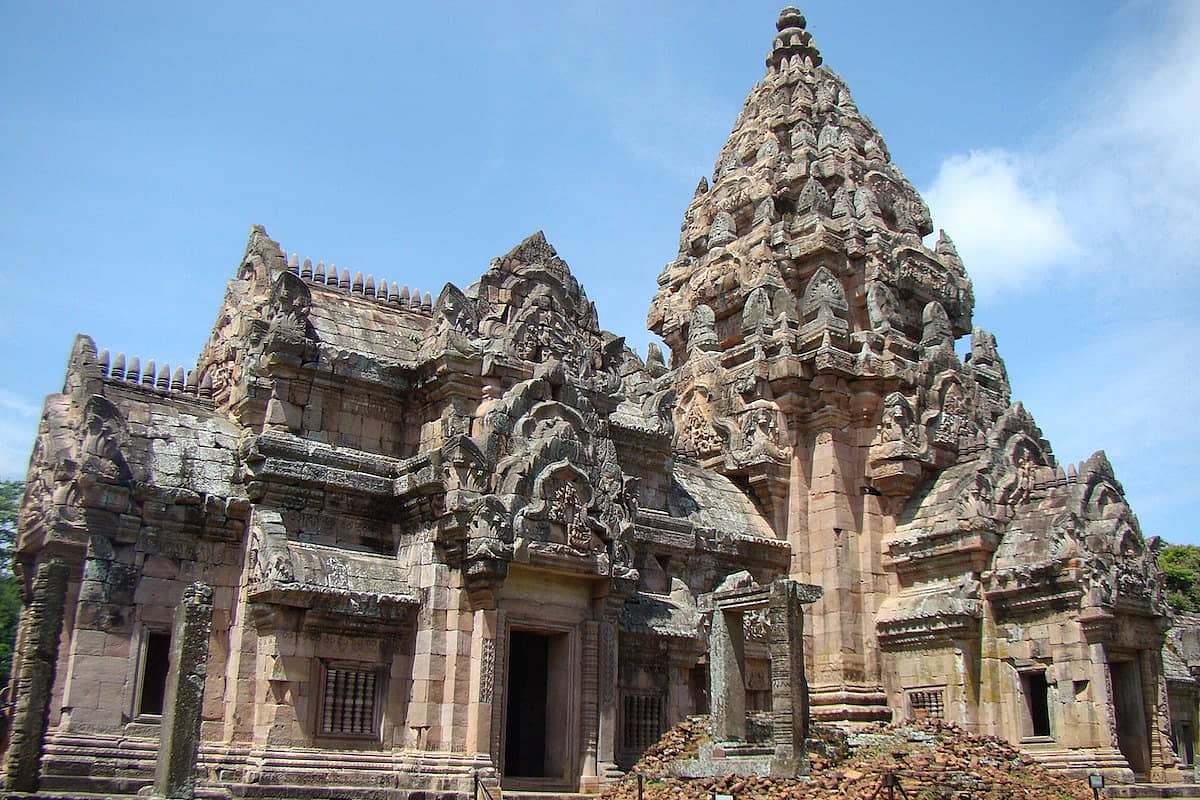
The real highlight is this Hindu temple, built between the 10th and 13th centuries, set on an ancient volcano, about 1,300 feet above sea level, overlooking the plains of Isan. You arrive along a laterite causeway lined with frangipani trees, the air feels cooler, and the pink sandstone deepens to amber in the sun. Prasat Phanom Rung was dedicated to Shiva, and everything here speaks of a sacred mountain.
Take time to look up at the finely carved towers, lintels, and pediments. The details are precise, almost chiseled like stone lace. It’s easy to see why this site is considered one of the masterpieces of Khmer architecture in Thailand, without the crowds of Angkor.
Follow the sacred axis, from the nagas to the central sanctuary
Part of the magic of Phanom Rung is the slow, ceremonial walk. The route is designed as an ascent toward the divine, marked by naga bridges, pavilions, and stairways. Beneath your feet, the stone holds the heat, while the wind rustles through the tall grasses around the pools.
Move forward through the perfectly aligned doorways, as if the temple were gradually drawing you in. This striking perspective is also a lesson in Hindu cosmology, a symbolic progression toward Mount Kailash, Shiva’s mythical home.
Look for the carvings and the legend of Shiva in the stone
One of the most captivating things to do here is play detective, piecing together the stories in the bas-reliefs. On the lintels, mythological scenes come to life, featuring Vishnu, Indra, and above all Shiva. Step closer, and the low-angled light reveals curves, faces, and garlands of flowers carved with surprising delicacy.
If you’re traveling with kids, it’s a wonderful place to spark the imagination, making up stories about the sculpted figures. For adults, it’s an intimate introduction to Khmer art, because here you can truly take your time.
Come at dawn, or time your visit for the solar alignment if you can
The best time to visit is early in the morning, when the site is almost silent. Mist drifts away above the fields, birds replace human voices, and the stone seems softer in the gentle light.
If your schedule allows, the solar alignment actually happens four times a year. The rising sun passes perfectly through the sanctuary's 15 doorways in early April and early September, while the setting sun does the same in early March and early October. Exact dates vary each year, so check with your local expert. Locals speak about it with pride, and the atmosphere becomes electric without feeling showy, like a quiet meeting between sky and architecture.
Add a lesser-known detour to Prasat Muang Tam below
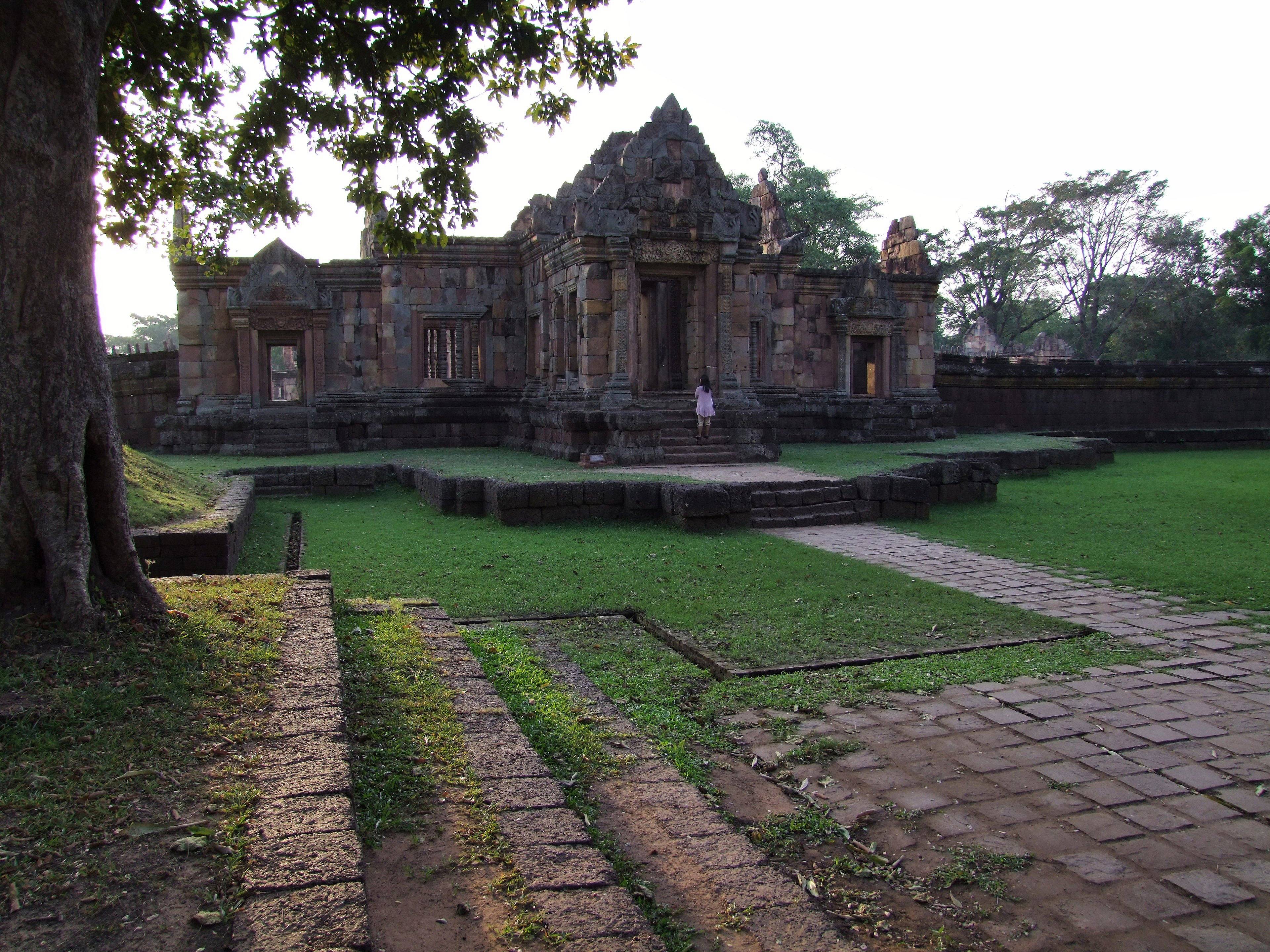
A few miles away, Prasat Muang Tam extends the experience with a more hidden charm. The temple sits lower, feels more open, and is surrounded by pools and small towers, creating a sense of space and calm. You hear insects, smell the earth after rain, and move through the site almost at the pace of a stroll.
The two sites complement each other beautifully, Phanom Rung for its grandeur and monumental axis, Muang Tam for its balance, water, and the feeling of having a place almost to yourself, especially outside weekends.
Take a break in Buriram, between Isan food and local crafts
To round out the visit, plan a stop in Buriram, a practical base and a pleasant place to get a taste of Isan. In the evening, look for a market where pork skewers sizzle, spicy papaya salad is served fresh, and sticky rice is shared simply with your fingertips.
It’s also a chance to experience a quieter Thailand, away from the coast and closer to the land. Evaneos’ local experts can often help you time your visit well, avoid peak crowds, and add a great local restaurant or small craft workshop that makes all the difference.
An idea for experiencing Prasat Phanom Rung differently?
To experience Prasat Phanom Rung in a different way, aim for the blue hour at dawn. Arrive right when the site opens, when the laterite is still cool, the frangipani scents the air, and you can climb the naga steps almost in silence, before the tour buses arrive. Another idea is to time your visit for the solar alignment days, at sunrise or sunset, when the light passes through the sanctuary doorways. It’s a real but fleeting moment, lasting just a few minutes. Evaneos’ local experts know the best time slots and the viewing points that help you avoid the crowds.
Our tips for visiting Prasat Phanom Rung
- Arrive early, around 7:30 a.m., when the air is still cool and the stones turn pink in the sunlight. You’ll avoid the heat and the groups. The climb up the great naga-lined avenue is best enjoyed in silence.
- Wear sturdy shoes, as the steps can be slippery after rain. Bring water, a hat, and mosquito repellent. According to our local partners, the softest light falls in the late afternoon, perfect for seeing the carved details.
- Respect temple etiquette, with shoulders and knees covered and voices kept low. Take time to observe the lintels, Hindu scenes, lotus flowers, and guardians. A local guide can make all the difference, explaining the symbols without overwhelming you.
- Combine your visit with Prasat Muang Tam and a night in Nang Rong, which is quieter than Buriram. If you come in early April, aim for the sun passing through the 15 doorways, a rare moment, but be sure to arrive very early.