




What to see and do in Robberg Nature Reserve
1. Hike the Robberg Peninsula Trail based on how much time you have
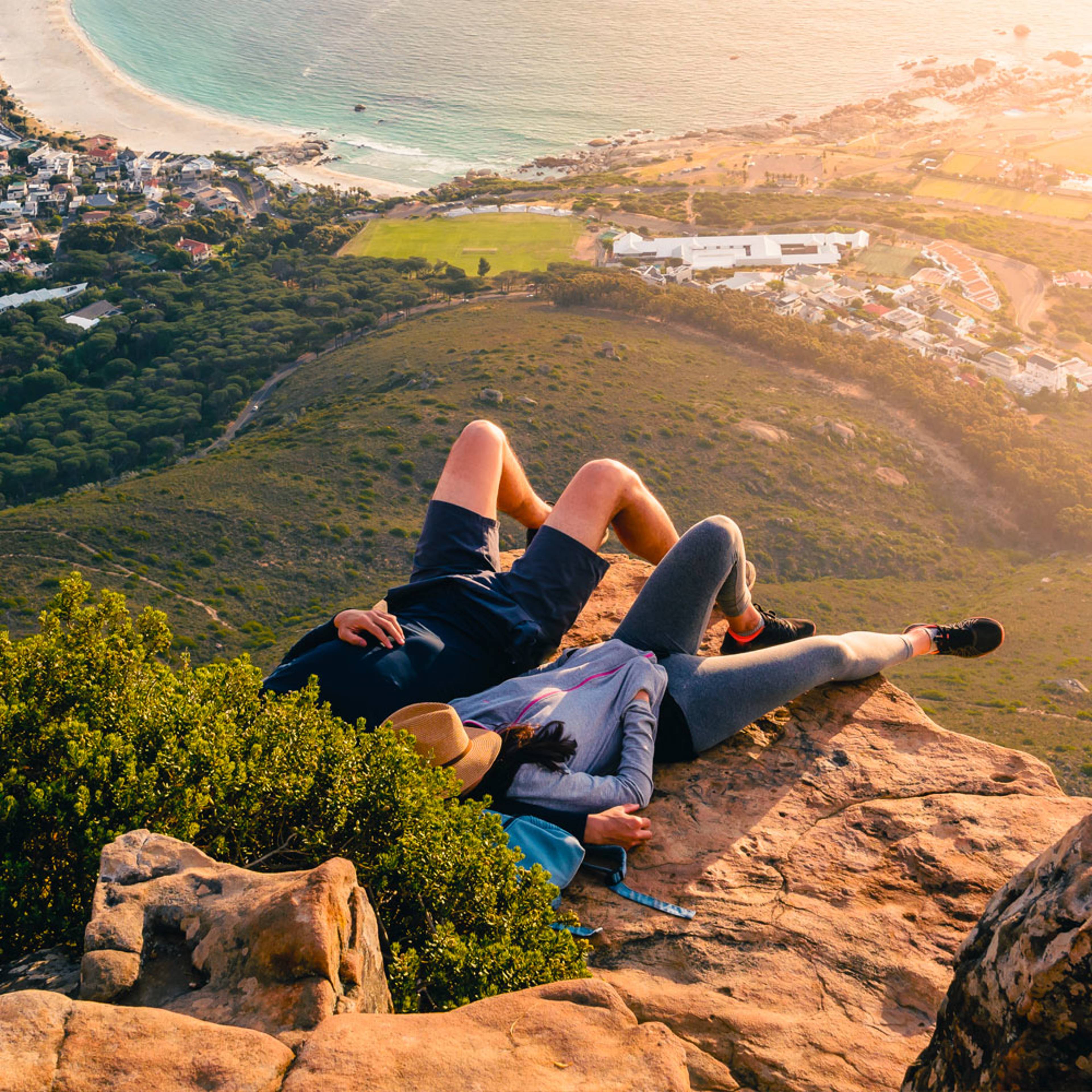
The main attraction is the hiking trail that winds around the tip of the peninsula, through fragrant fynbos and over sun-warmed rocks, with views across the blue waters of Plettenberg Bay. There are three routes to choose from, ranging from the short, easy Gap route to the longer Point route, which is ideal for those who enjoy a challenging hike. Expect steps, sandy stretches and some uphill sections, along with exhilarating views from the edge of the peninsula and the salty sea breeze on your face.
Along the way, take time to look up. Cormorants dry their wings, gulls call through the gusts. When the light turns golden, Robberg takes on a different character: the rocks glow with warm, honey-colored tones and the waves appear brighter.
2. Watch seals from the clifftops
One of the main attractions here is the colonies of Cape fur seals gathered on the rocks below the cliffs. From viewpoints along the trail, you’ll first spot their dark shapes, then hear their grunts and splashes carried on the wind. With binoculars, you can get a closer look at pups weaving through the colony and adults basking in the sun, seemingly unbothered.
Morning is often the best time, when the sea is calmer and visibility is clearer. Keep your distance. This is a wild and fragile place, and here, you observe without disturbing, which is exactly what makes the moment so special.
3. Look for whales and dolphins from the viewpoints
Between July and November, Robberg offers a wonderful vantage point for spotting migrating southern right whales. From the promontories, scan the horizon, then suddenly, a spout, a dark mass, a shining back. Outside whale season, dolphins can still be spotted offshore, swimming through the waves and sometimes coming close to shore.
Choose a clear day, especially after a windy front, when the air turns crisp and bright. Then settle in and give it time. At Robberg, wildlife watching rewards patience.
4. Walk down to hidden beaches and feel the ocean
The reward is reaching the beach at the end of the trail and discovering secluded coves framed by rocks. The water is cool and refreshing, making a welcome contrast after the hike, especially with the sea breeze and salt on your skin. At Witsand, the beach is often more sheltered, perfect for a longer break.
Bring a towel, water and keep an eye on conditions, as currents can be strong. Even if you don’t swim, sitting there, listening to the surf and watching the waves shape the rocks, is enough to fully disconnect.
5. Spot fynbos plants and seabirds
Robberg is also home to a rich variety of fynbos, the Cape’s low-growing, hardy vegetation, adapted to salty winds and coastal conditions. As you walk, you’ll pass proteas, flowering shrubs depending on the season, and carpets of low plants that catch the light. Signs help you put names to what you’re seeing, but the real pleasure is sensory: the crunch underfoot, the smell of warm earth.
Overhead, listen closely. Seabird calls set the rhythm of the walk. With a little luck, you’ll see a cormorant dive like an arrow, or a raptor riding the thermals above the cliffs.
6. Photograph the cliffs at sunrise or sunset
The landscape is at its most striking when the low light illuminates the cliffs and casts steel or copper tones across the ocean. Sunrise brings an almost silent softness, while sunset colors everything (rocks, trail, vegetation) and turns distant Plettenberg Bay into an idyllic backdrop. Bring a wide-angle lens, but don’t forget the details: foam in the crevices, layers in the rock, footprints in the sand.
Arrive a little early, walk at an easy pace, and bring a headlamp if you plan to finish late. At Robberg, photography quickly becomes secondary. What you really bring back is a feeling, as if you had touched the coastline with your fingertips.
Into the wild beauty of Robberg Nature Reserve
Iconic wildlife to look for in Robberg Nature Reserve
Here’s the wildlife to watch for, binoculars at the ready, in Robberg Nature Reserve, between salt-sprayed cliffs and fragrant fynbos:
- Cape fur seals, in noisy colonies on the rocks, diving and splashing into the water.
- Dolphins, often visible offshore, slicing through the foam.
- Southern right whales, in season, especially from July to November, with white spouts on the horizon.
- Cormorants, terns, and gulls, riding the wind and skimming the waves.
- Rock hyraxes, motionless in the sun, then quick and discreet between the stones.
The plants and vegetation that shape Robberg Nature Reserve
In Robberg Nature Reserve, the trail follows low, windswept vegetation, perfect for spotting:
- Coastal fynbos, a carpet of heather, restios and small proteas, releasing a resinous scent after the rain
- Milkwood trees (Sideroxylon inerme), with twisted silhouettes that cling to the dunes and offer a little shade
- Salt-tolerant plants on rocks and beaches, like sour fig, with bright, fleshy flowers
- Patches of renosterveld, grasses and wild daisies in spring
Add Robberg Nature Reserve to a tailor-made South Africa trip
With Evaneos, you’ll connect directly with a local, English-speaking expert based in South Africa. They know the seasons, driving distances, great local spots, and the detours that make all the difference, the ones you won’t find on a map. The result is a smoother journey, with fewer unexpected challenges and more time to enjoy your trip.
Want to include Robberg Nature Reserve, its trails above the waves, and its seals below the cliffs? Your local expert will design a tailor-made trip, from the Garden Route to Kruger, based on your pace, budget, and travel style, with someone truly on the ground.