



What to see and do in Kruger National Park
1. Head out at dawn on a game drive along the park’s tracks
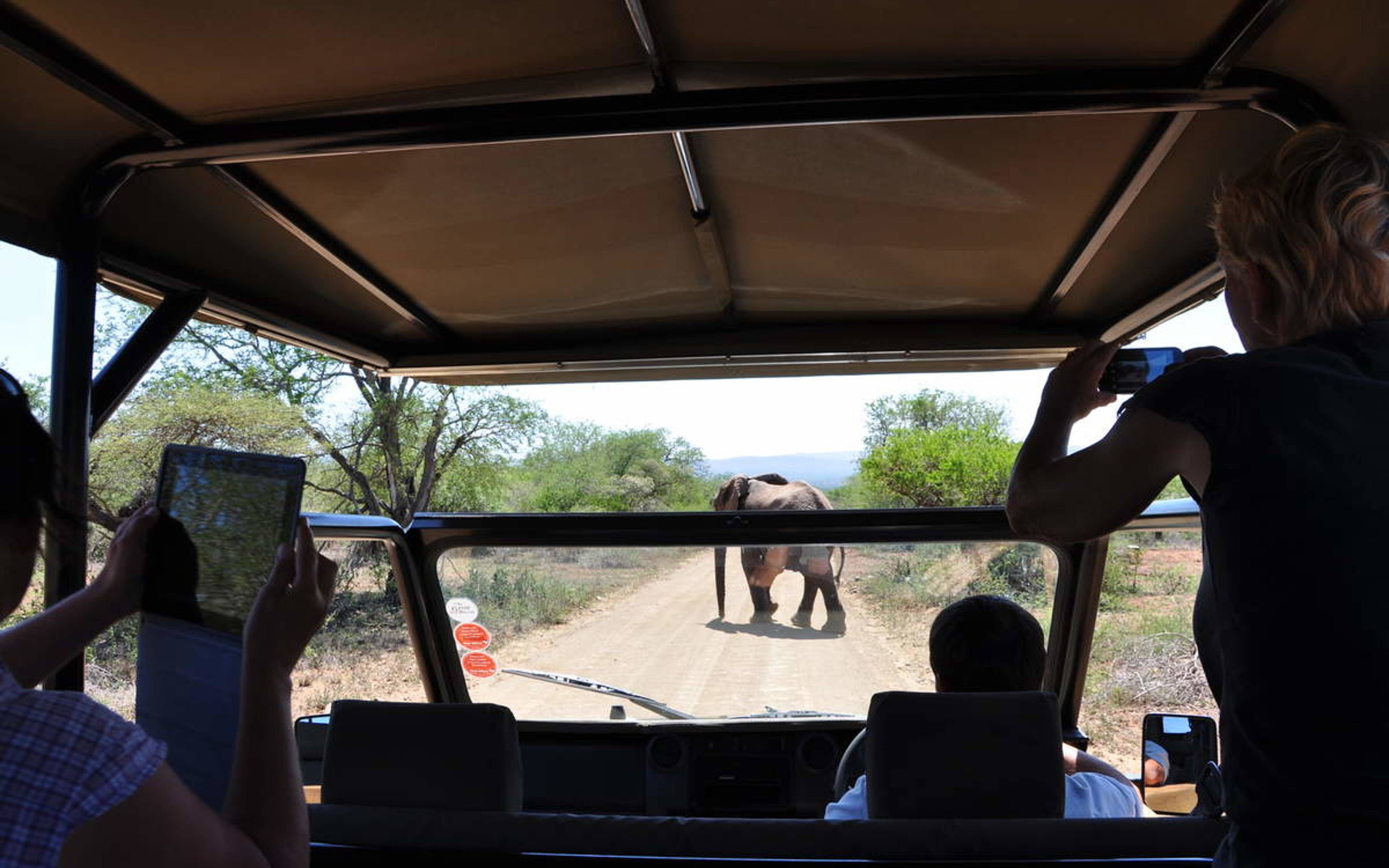
Kruger is at its liveliest at first light. The air is cool, your eyes may still feel a little heavy, and francolins are already calling from the bushes. On a self-drive safari or with a ranger, you drive slowly with the window cracked open, watching for the slightest movement in the grass. Lions are returning from the hunt, hyenas linger near waterholes and elephants cross the track, kicking up dust as fine as flour. Patience is often rewarded here.
2. Take your time spotting the Big Five
Spotting the Big Five in Kruger is all about learning to read the bush. Instead of rushing from one radio call to the next, watch for signs: impalas frozen in place, oxpeckers on the back of a large animal, vultures circling overhead. Buffalo sometimes gather like dark rivers along the pans (shallow seasonal pools), you might make out rhinos in the shade of mopane trees, and leopards favor drainage lines and tall trees. By late afternoon, the golden light makes every scene even more striking.
3. Walk with a ranger and see the bush in a whole new way
On a bush walk, you see Kruger up close, and everything feels quieter and more intense. On foot, the scent of warm earth and crushed leaves takes over, and every crackle becomes a clue. Your ranger points out fresh tracks, an active termite mound, and the difference between two big cat prints, and explains how local plants are used: some heal, others sting. You walk quietly in single file, more alert than ever and completely in tune with your surroundings.
4. Settle in near a waterhole and watch life unfold
Pick a waterhole, stay put, and let the show come to you. With a bench, a water bottle, and a pair of binoculars, time seems to slow down. Herds arrive in waves: nervous zebras, graceful kudus, elephants spraying themselves as their ears flap. Birds set the mood: kingfishers, egrets, hornbills. As the heat rises, tension builds between the animals, then eases again. It’s like watching an unedited nature film, raw and beautiful.
5. Sleep in a SANParks camp and experience Kruger after dark
Spend the night in a park camp and you’ll hear the savanna after the gates close. After the braai (a South African barbecue), the fire crackles and neighbors at the table swap stories of the day’s sightings. Then the night concert begins: hyenas calling, a lion rumbling in the distance, a bush baby rustling in the tree above your bungalow. Some camps have river viewpoints you can reach on foot. In the early morning, coffee in hand, you’re right in the middle of it all.
6. Explore the culture and landscapes around Kruger through local communities
Leaving the safari tracks to meet the communities around the park takes your trip beyond wildlife. Around Kruger, several community-led initiatives and local guides share another side of the Lowveld, through bush knowledge, crafts, food, and everyday stories. It’s also a chance to slow down, learn about the history of the area, and support the local economy. With your Evaneos local expert, you can choose respectful, well-run experiences that truly benefit the communities you visit.
Into the wilderness of Kruger National Park
Iconic animals to look for in Kruger National Park
In Kruger, keep your eyes wide open at sunrise. Here’s the wildlife you may be lucky enough to spot:
- The Big Five: a lion dozing in the shade, a stealthy leopard on a branch, elephants on the move, a rhino near a waterhole, buffalo gathered in a dense herd
- Giraffes cutting across the horizon and zebras striped like brushstrokes
- Hippos snorting in the rivers, crocodiles lying still along the banks
- Antelope, including impalas and kudus, leaping through the tall grass
- Striking birds: eagles, hornbills, and brilliantly colored rollers
The flora and vegetation that shape Kruger National Park
In Kruger, the trees and their scents tell you a lot about the savanna too:
- Mopane: butterfly-shaped leaves trembling in the heat, especially in the north of the park.
- Marula: pale trunks and sweet fruit loved by elephants, a classic sight in late summer.
- Baobab: massive, almost mythical silhouettes found in the northern areas.
- Acacias (vachellias): thorns, delicate shade, and pale yellow flowers, a favorite spot for weaver birds.
- Fever trees: yellow-green bark catching the light near wetlands.
Add Kruger National Park to a tailor-made South Africa trip
With Evaneos, you connect directly with local, English-speaking experts based in South Africa. They know the roads, the seasons, the best times of day, and the spots that matter. So while you’re there, you’ll have someone nearby to fine-tune your trip, answer your questions quickly, and help you avoid unpleasant surprises.
Dreaming of Kruger National Park? Your expert designs a custom trip around your pace, budget, and interests, from safari days to easy travel between stops. They’ll also show you a different side of South Africa, from its big icons to quieter, lesser-known corners.