



What to see and do in Sabi Sand Game Reserve?
1. Go on a sunrise 4x4 safari
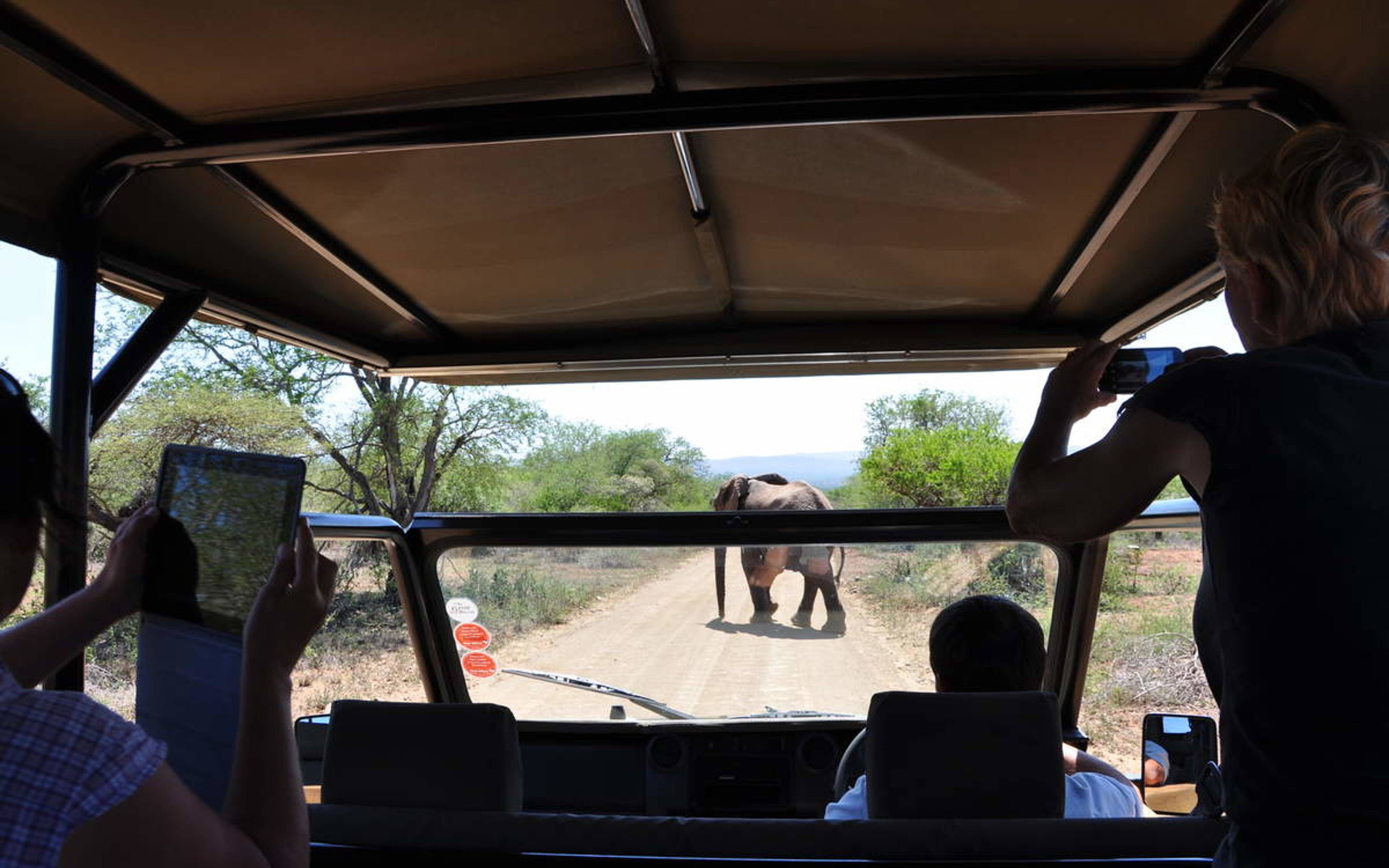
The Big Five (lion, leopard, elephant, buffalo, and rhino) all roam Sabi Sands. Game drives head out twice a day in open vehicles, once in the morning and again in the late afternoon, and because the reserve is private, rangers can leave the main roads to follow an animal through the bush. You might come across a herd of buffalo crowding a watering hole or an elephant stripping bark from a marula tree just a few yards away.
Rangers stay in touch by radio, and only a few vehicles are allowed at a sighting at once, so it never feels crowded. When you pull up, the engine goes quiet, voices drop, and the animals carry on as if you weren't there.
2. Track leopards from iconic family lines
Sabi Sands is known for its leopards, many of which are used to safari vehicles. With a little luck, you might find one draped over a thick branch, tail hanging loose, amber eyes locked on you. For a moment, the only sounds are the click of cameras and the rustle of leaves in the warm breeze.
Rangers know each leopard's bloodline, territory, and habits. They share stories of rivalries, night hunts, and rare moments of grace, without ever forcing an encounter. A sighting may last a minute or an hour, and that uncertainty is what makes the wait worth it.
3. Set out on a walking safari with a ranger and tracker
On a walking safari, you notice things you'd never catch from a vehicle: the snap of a twig somewhere close by, the round print of an elephant on the trail, a spiderweb strung between two branches. You walk in single file behind your ranger and tracker, who know exactly where to step and when to stop.
A bush walk isn't about chasing thrills. It's about slowing down and paying attention. You learn to pick up on the small signs animals leave behind, keep a respectful distance, and see how every species depends on the others, from the dung beetle to the lion.
4. Experience a night safari in search of elusive wildlife
Discovering the reserve after dark opens up another world. Spotlights sweep across the tall grass, eyes suddenly glow, an owl calls, and somewhere a lion lets out a deep rumble. You look for the creatures of the night: genets, civets, porcupines, prowling hyenas, and sometimes a leopard on the hunt, moving like a shadow.
The temperature drops, the scent of the earth grows stronger, and sounds seem closer. It is a more mysterious, more sensory safari, where you learn to see differently, trusting your guide and their knowledge of the land.
5. Settle in at a watering hole and watch life unfold
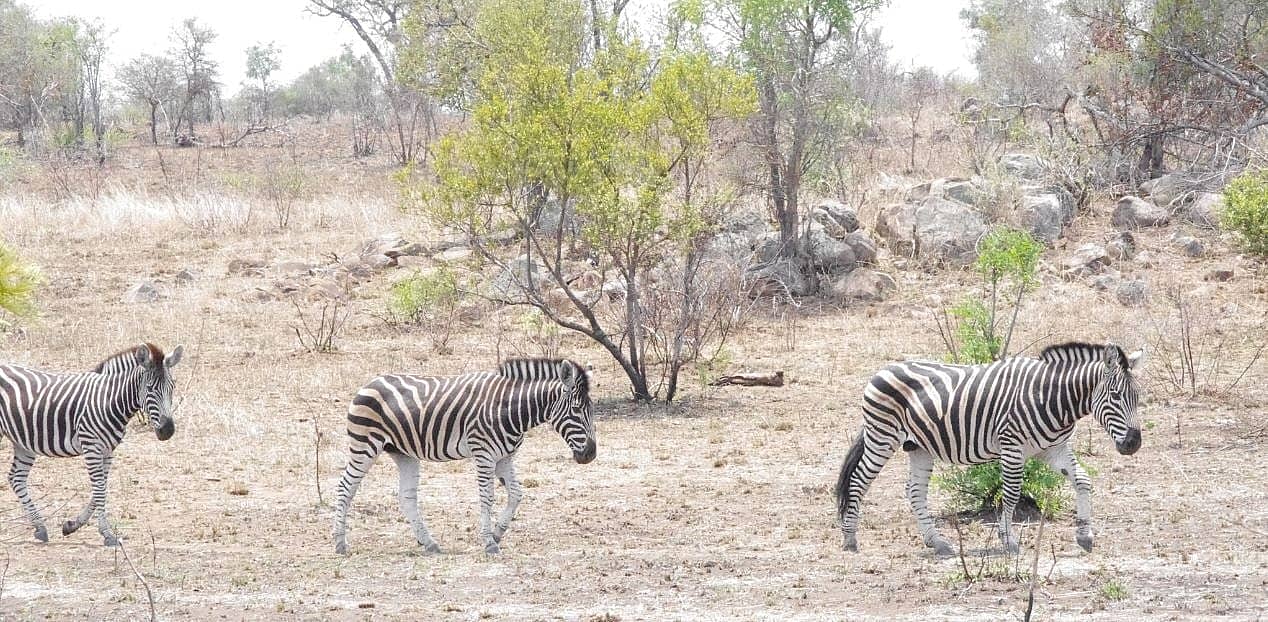
Sometimes, staying still is the most powerful experience. At a watering hole, the savanna becomes a stage, elephants arriving as a family to drink, nervous impalas, zebras shaking off dust, weaver birds fluttering in the acacias. Time slows down, and you start noticing details, a hierarchy, a tension, a quiet understanding.
With binoculars and a good guide, observation becomes storytelling. You begin to understand who sounds the alarm, who dominates, who gives way. And often, the best moment comes when you least expect it, a predator appears, or a herd crosses through a cloud of amber dust.
6. Ease into lodge rituals, from morning coffee to the evening boma
Letting yourself follow the rhythm of safari is part of the trip. Early in the morning, you hold a steaming cup of coffee in your hands, then return to the lodge for a generous brunch: fruit, warm bread, and spiced flavors. In the afternoon, there is time for a nap, the call of turacos, and then back onto the tracks before returning after dark.
In the evening, the boma brings everyone together around the fire. You dine under the stars, smoke scents the air, and stories from the day are shared. It is then that you realize how lucky you are to be guided by local teams, rangers, trackers, cooks, who turn each moment into a lasting memory.
Immersion in the wilds of Sabi Sand Game Reserve
Iconic animals to spot in Sabi Sand Game Reserve
In Sabi Sand Game Reserve, safaris often unfold as a series of unforgettable encounters:
- The Big Five, with leopards in the spotlight, along with lions, elephants, buffalo, and sometimes rhinos
- Cheetahs sprinting across open grassland
- African wild dogs, stealthy and fascinating pack hunters
- Giraffes and zebras, calm at the edge of the watering holes
- Hippos and crocodiles, motionless in the rivers, until a sudden ripple
The plants and vegetation that shape Sabi Sand Game Reserve
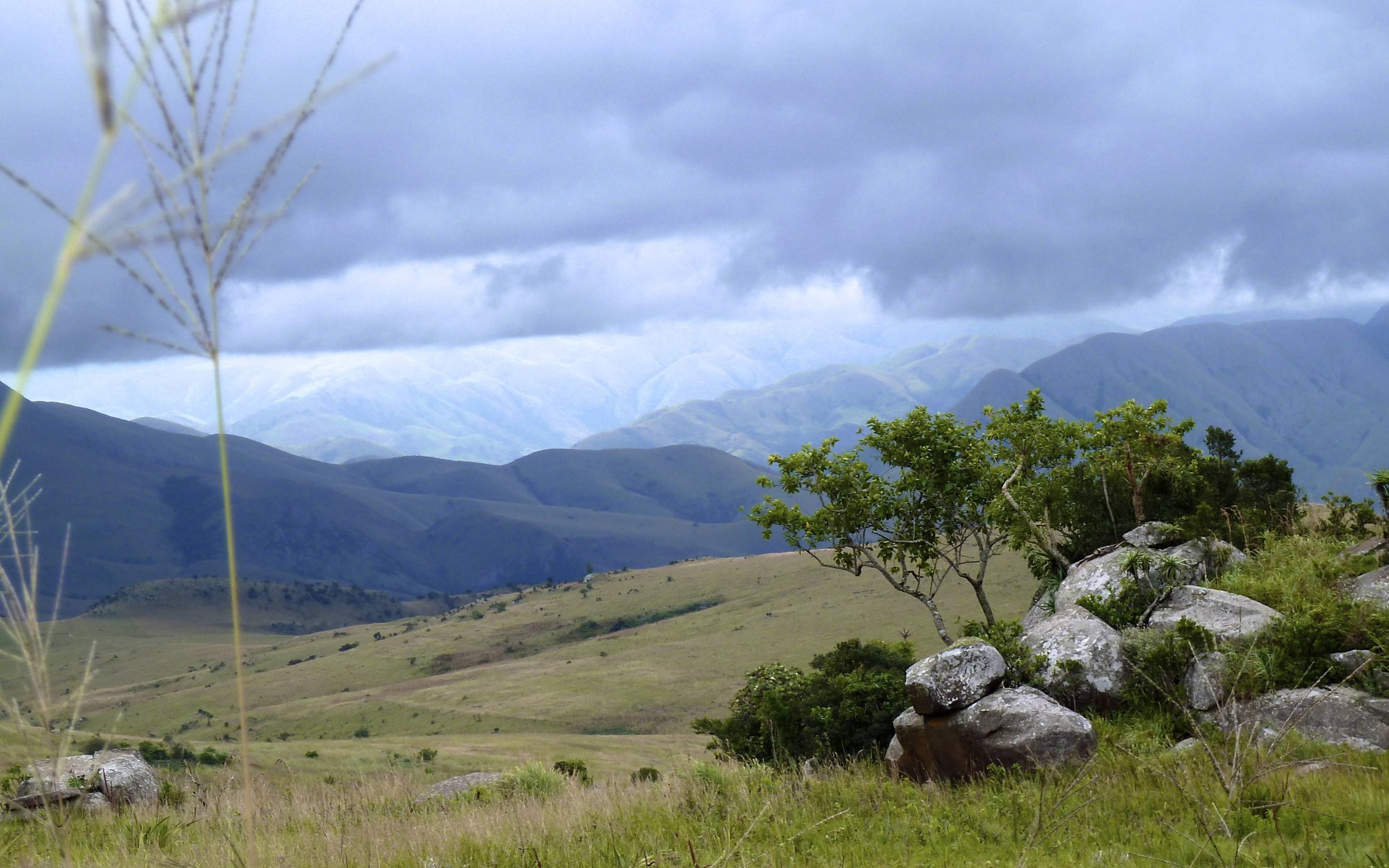
Keep your eyes open between sandy tracks: Sabi Sands reveals a wooded savanna where plant life appears in subtle layers.
- Marula: large, gnarled umbrella-shaped trees, with sweet fruit in late summer that elephants love.
- Acacias (Vachellia): fine thorns, cream-colored flowers, and classic bushveld silhouettes.
- Mopane: “butterfly wing” leaves that take on copper tones as the heat fades.
- Combretum (bushwillow): dense foliage, ideal shelter for birds and antelope.
- Aloes and euphorbias: green spikes and milky sap, with bursts of orange-red flowers in winter.
Add Sabi Sand Game Reserve to a tailor-made trip in South Africa
With Evaneos, you’ll connect directly with an English-speaking local expert based in South Africa. They know the real travel times, seasons, scenic back roads, and best local spots. The result: you save time, avoid missteps, and travel with peace of mind, knowing you have someone reliable on the ground.
Together, you’ll design a tailor-made trip, from Cape Town to Kruger, with a stop in Sabi Sand Game Reserve for an exceptional safari close to the wild, shaped around your pace and interests.