




What to see and do in Tsitsikamma National Park
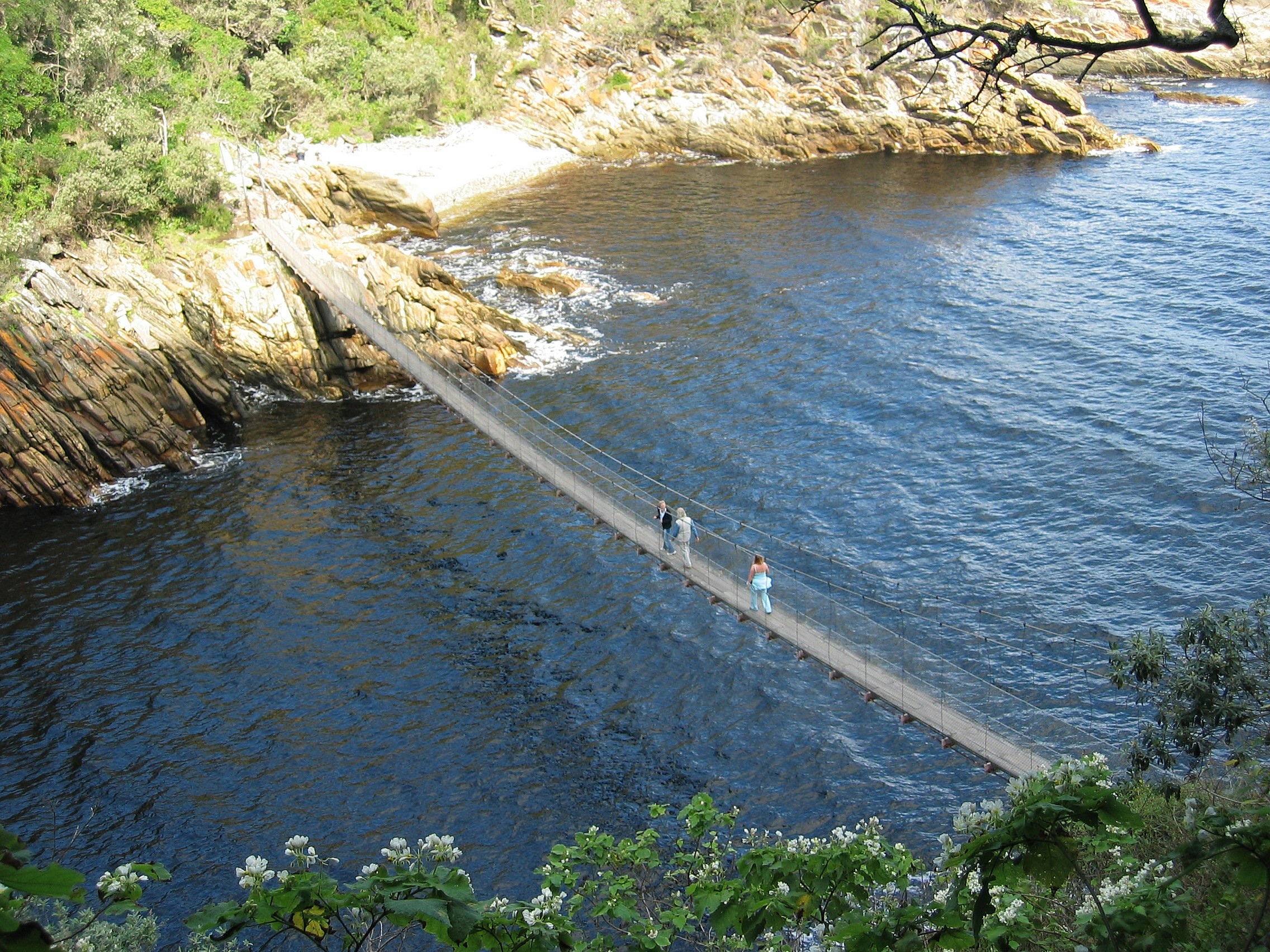
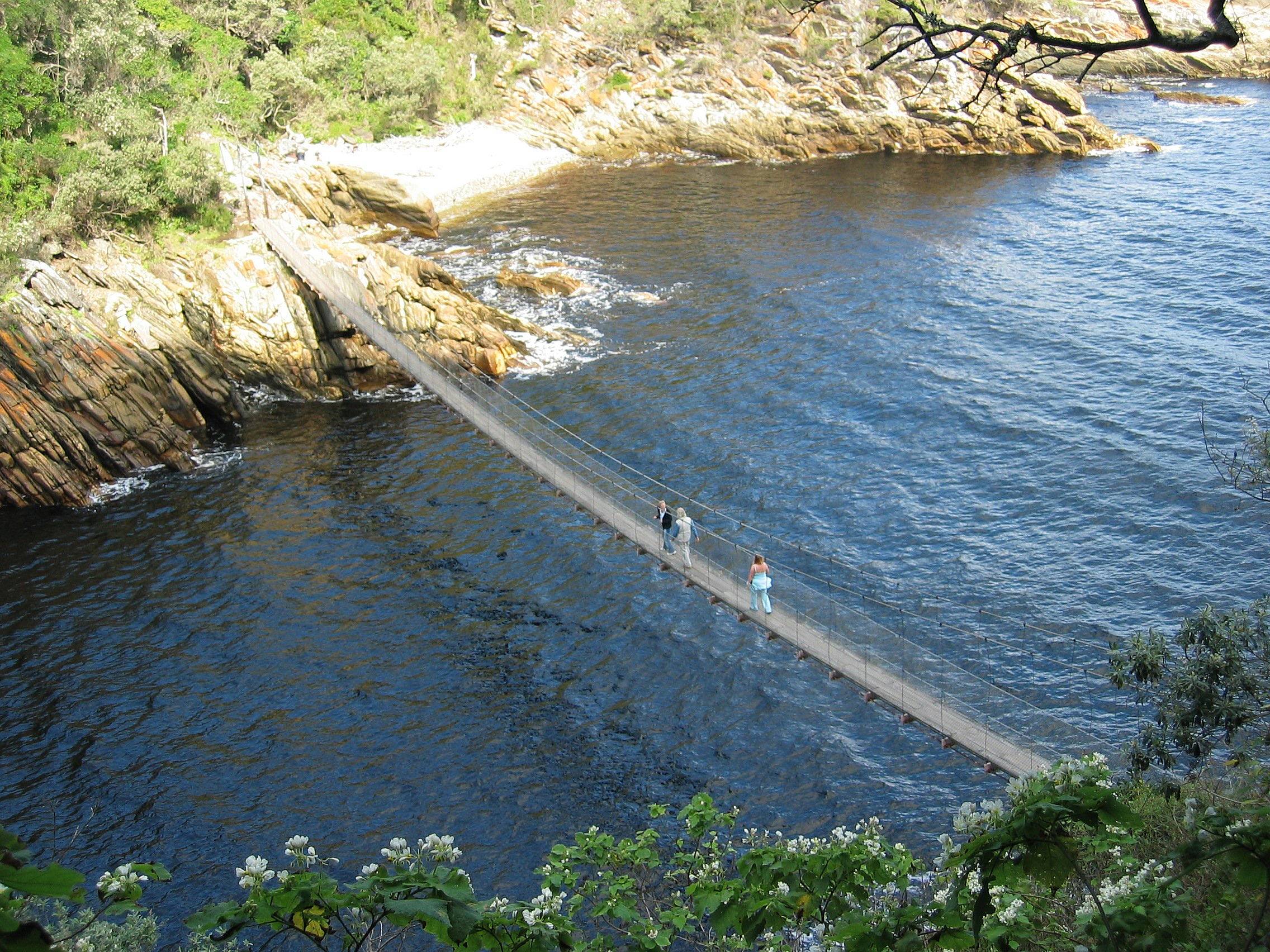
1. Walk to the Storms River Mouth Suspension Bridge
One of Tsitsikamma’s highlights is its suspension bridge above a dramatic gorge, where the Storms River meets the ocean. The trail starts near the rest camp and is easy to follow, winding through tree ferns and clusters of fynbos that smell fresh after the rain. You walk to the sound of waves crashing against black rock, then the bridge appears: metal, shimmering underfoot. Stop in the middle, take a breath and watch the foam swirl beneath you. It’s hypnotic.
2. Hike part of the Waterfall Trail
One of the best ways to experience the park is on a coastal hike where the Indian Ocean crashes against the cliffs. The Waterfall Trail follows a narrow path that is sometimes rocky, sometimes sandy, with sections where you slow down and place each foot carefully. The reward is a small waterfall spilling into a natural pool, perfect for a break when the sea is calm enough. If the ocean is rough, stay cautious, watch from a safe distance, and enjoy the light painting the rocks in ocher and green. This section, the first part of the Otter Trail, which can take up to five days to complete in full, can be tricky in wet weather. Check the forecast carefully and bring proper hiking gear.
3. Explore the ancient forest on the Loerie Trail
Looking for a quieter side of Tsitsikamma, sheltered from the wind? Head into the indigenous forest on the Loerie Trail. Here, the air is cooler, damp, almost sweet, and the leaf-covered ground softens each step. Moss clings to tree trunks, vines twist upward, and birds call back and forth from one canopy to the next. The trail forms an accessible loop, ideal for families, with just enough elevation gain to feel like a real walk, not a major expedition.
4. Bike the gravel roads of the Garden Route
Tsitsikamma can also be explored by bike, along tracks that alternate between green tunnels and open views of the hills. You ride on gravel, sometimes smooth, sometimes more challenging, passing plantations, forests, and small bridges, with the resin scent of pine trees and the steady song of cicadas in the air. It’s a gentle way to cover more ground without rushing. Local experts know the best loops, the ones that avoid the busiest stretches and can be adapted to your group’s level.
5. Kayak on the Storms River
To really experience the landscape, glide across the water between sculpted cliffs and a tea-colored river that goes beneath the forest. In a kayak, you follow the calm current, then the gorge narrows, the echo of dripping water deepens, and the light turns green, filtered through the trees. Depending on the outing, you may combine paddling with walking over rocks to reach more hidden corners. With local guides, you’ll learn how to read the tides and move respectfully through this fragile corridor.
6. Try ziplining above the treetops
For a well-run, low-impact adrenaline rush, ziplining through the canopy gives you a panoramic view of Tsitsikamma from above. You gear up, listen to the safety briefing, then launch into the air, with the wind in your ears and the forest moving beneath your feet. Between platforms, take time to notice the textures: bark, ferns, and shafts of light. It’s fun, accessible and surprisingly peaceful, especially in the late afternoon when the air begins to cool.
Into the wilderness of Tsitsikamma National Park
Iconic wildlife to look for in Tsitsikamma National Park
In Tsitsikamma National Park, between moss-scented forest and waves breaking over the rocks, keep an eye out for:
- Common dolphins and occasional spinner dolphins, surfing the swells offshore.
- Southern right whales, visible in season from coastal viewpoints.
- Cape clawless otters, slipping quietly between kelp and natural pools.
- Rock hyraxes, still and sun-warmed near the cliffs.
- Seabirds, including cormorants and petrels, carried by the salty wind.
The plants and vegetation that shape Tsitsikamma National Park
In Tsitsikamma National Park, look out for this dense, fragrant coastal flora:
- Cape fynbos, a diverse shrubland with distinctive plants and colourful flowers, with proteas and heathers.
- Yellowwood groves, tall indigenous forest trees casting resin-scented shade.
- Vines, ferns, and mosses in damp ravines, carpeting trunks near the streams.
- Aloes and succulents on sunny slopes, well adapted to withstand salty coastal winds.
- Dune vegetation: grasses and shrubs that hold the sand in place along the ocean.
Add Tsitsikamma National Park to a tailor-made South Africa trip
With Evaneos, you’ll be connected with a local, English-speaking expert based in South Africa who knows the country inside out. They’ll fine-tune your itinerary around your interests, pace and budget, and respond quickly because they’re based locally.
Want to include a stop in Tsitsikamma National Park? Your local expert can recommend the best times to hike to the suspension bridge, quiet spots away from the many visitors, and trusted places to stay or eat. Enjoy a truly tailor-made trip, designed with someone who lives there.