



Bang Pa-In, a brief history
About an hour north of Bangkok, Bang Pa-In tells a story of kings, water, and the changing seasons. It began in the 17th century, when the rulers of Ayutthaya chose this bend in the Chao Phraya River as a place to rest, away from the heat of the city walls. After the fall of Ayutthaya, the site slipped into silence, overtaken by tall grass. It came back to life in the 19th century, when King Rama IV, then Rama V, turned it into a summer residence. The palace became a surprising patchwork of styles, with Thai pavilions set on ponds, Chinese influences, and European touches. As you walk beneath the frangipani trees, you follow in the footsteps of a royal court that came here in search of cool air, beauty and a little peace.
What to see in Bang Pa-In
Bang Pa-In is the most beautiful cultural detour between Bangkok and Ayutthaya, an elegant pause on the banks of the Chao Phraya where Thai royalty brought together gardens, pavilions, and influences from around the world. Come here to wander, take it all in, and slow down, far from the crowds.
Bang Pa-In Royal Palace, an architectural journey surrounded by greenery
The heart of the visit is Bang Pa-In Summer Palace, an estate as carefully kept as a jewel box, with pristine lawns, shimmering ponds, and pathways lined with sculpted trees. You walk from one building to the next, as if turning the pages of an architectural photo book, with birdsong in the background.
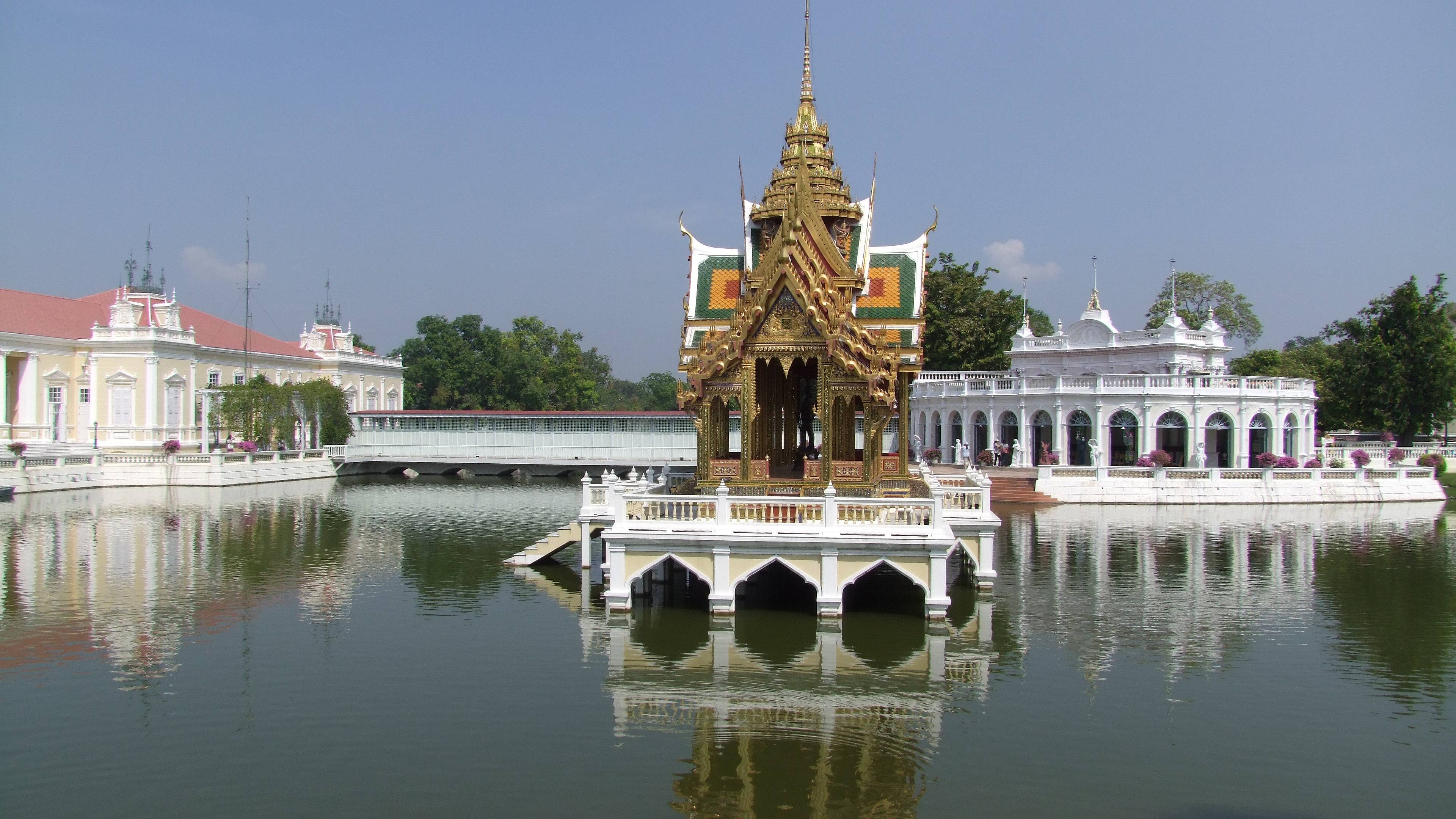
Don’t miss the Aisawan Thiphya Asana Pavilion, set on the water, with its delicate silhouette rising above the lily pads. It’s probably the most photographed view on the estate. Farther on, you’ll find European-inspired residences and, in a playful twist, a Buddhist temple that looks like a Gothic chapel, stained glass included. Together, they create a setting that feels unexpected, never kitschy, and always harmonious.
Wehat Chamrun, a Chinese-style pavilion scented with incense and old wood
Inside the palace grounds, the Wehat Chamrun Pavilion immediately draws the eye with its layered roofs, deep reds and gold details. Given to King Chulalongkorn by the Chinese community, this mansion houses a throne room on the ground floor and, upstairs, a shrine dedicated to Kings Mongkut and Chulalongkorn. Your gaze lingers on the details: carved dragons, lanterns, calligraphy.
Step inside quietly, take in the richness of the decor, and let the stillness of the place settle around you. It’s a wonderful way to understand how the royal court wove ties with Chinese culture, not by forcing anything, but by naturally integrating it into the landscape.
Ho Withun Thasana Tower, the best viewpoint over the gardens
To take in the full scale of the estate, climb the 112 steps of the Ho Withun Thasana observation tower, a brightly colored 98-foot structure overlooking the whole park. At the top, the breeze rewards the effort, and Bang Pa-In unfolds like a life-size model: canals, rooftops, lawns, and perfectly framed views.
It’s the perfect spot for a photo break, but also a place to slow down and simply look, once you’ve caught your breath. You understand why this site was designed as a retreat, a place to breathe, where water and greenery refresh the mind as much as the body.
The Chao Phraya by boat, arriving the way people once did
The most beautiful way to approach Bang Pa-In is by boat on the Chao Phraya River, either from Ayutthaya or as part of a river stop. Plan about 45 minutes of gentle cruising. Water laps against the hull, stilt houses pass by along the banks, and everyday Thailand comes into view: fishing nets, quiet temples, children waving from the shore.
This arrival has a rare, almost ceremonial charm. It’s also how the kings themselves once reached their palaces, by royal barge rather than by road. It’s a softer, more responsible way to travel, choosing a slower pace instead of rushed back-and-forth trips by van.
The small market and nearby cafés, tasting Bang Pa-In simply
To round out your visit, make a stop nearby, where Bang Pa-In is experienced at street level, among small stalls and quiet cafés. Order something refreshing, an iced tea, freshly cut fruit, or a Thai sweet flavored with pandan.
The charm is in the details: the smell of charcoal, the sound of woks, quick smiles exchanged in passing. It’s also a good time to ask locals or your local Evaneos agency for advice. They’ll know the best food stop of the day, the kind of place that doesn’t show up on generic lists.
Looking for a different way to experience Bang Pa-In?
To see Bang Pa-In differently, arrive right when it opens. The low morning light catches the glazed tiles and pastel facades, the gardens smell of damp grass, and the site is still almost silent. You can move at your own pace, without the rush, taking time to notice the details among Thai pavilions, European influences and Chinese touches. For a more local approach, combine your visit with a boat ride on the Chao Phraya from Ayutthaya, as the riverbanks wake up and temples drift past along the water. Local experts know the right times, access points, and detours that make the experience feel truly special.
Our tips for visiting Bang Pa-In
- Come early, right when it opens, to enjoy the gardens of Bang Pa-In in the cooler air, with birdsong and fewer groups. Morning light brings out the beauty of the pavilions and their reflections in the canals.
- Dress modestly, with shoulders and knees covered, this is a royal palace. Our local agencies recommend shoes that are easy to remove, since some areas require it, and a hat, as the sun can be strong along the paths.
- Take time to understand the architecture, Thai, Chinese, and European. On-site, your guide can show you where to stand for the best view of the Aisawan Thiphya Asana Pavilion, set on the water like a miniature palace.
- Combine your visit with Ayutthaya using low-impact transportation: a local train, or a long-tail boat to reach the palace via the Chao Phraya. It avoids unnecessary van transfers and gives the day a gentler rhythm.
- Once there, choose a private guided visit with a local English-speaking guide. The stories about the royal court and the symbolism of the buildings make all the difference, and you’ll avoid the busiest areas.