




13 incredible birds to spot in Costa Rica
With more than 900 bird species in Costa Rica, the country is a paradise for birders, from curious beginners to seasoned experts. In tropical forests, mossy mangroves, and above steaming volcanoes, nature spreads its wings in full technicolor. From oversized-billed toucans to hummingbirds suspended in midair, every flash of feathers tells a story.
Far from the rush of daily life, hearing a quetzal sing or catching the pink glow of a roseate spoonbill becomes a moment out of time, an invitation to slow down. On a trip to Costa Rica, keep your eyes open, listen closely, and set out to meet 13 of the country’s most beautiful birds.

Birds to see on a Costa Rica tour:
- Resplendent quetzal: Costa Rica’s iconic bird
- Rufous motmot: the “clock of the forest”
- Keel-billed toucan: the emblem of the rainforest
- Roseate spoonbill: the coastal bird with watercolor wings
- Scarlet macaw: the showstopping parrot of Tortuguero National Park
- Blue-gray tanager: the bird in 50 shades of blue
- Crested oropendola: the elegant black bird with a yellow tail
- Green thorntail hummingbird: the tiny emerald bird
- Harpy eagle: one of the world’s largest eagles
- Orange-collared manakin: the king of courtship displays
- Magnificent frigatebird: Costa Rica’s red-hearted bird
- Crested guan: the wild turkey of the rainforest
- Black-cheeked ant-tanager: the red flame of highland forests
1. Resplendent quetzal: Costa Rica’s iconic bird
The quetzal is one of the most fascinating in Central America, and one of Costa Rica’s great natural symbols. In the misty cloud forests of the Monteverde reserve, you can spot this small bird by its dazzling plumage and long tail: iridescent emerald green, deep bright red, and golden highlights.
Seeing a quetzal in the wild feels magical, almost sacred. Its soft, mysterious song echoes the legend of the god Quetzalcóatl, revered by the Maya and Aztec peoples. To admire it, explore Los Quetzales National Park with local guides, or stay in a family-run eco-lodge in the village of San Gerardo de Dota.
 ©
©
2. Rufous motmot: the clock of the forest
Perched on a tree branch in the shade of the understory, the rufous motmot looks like it came straight out of a tropical dream, with blue-green racket-shaped tail feathers and touches of orange. It sways gently, watching its surroundings with a bright eye, as if keeping time for the jungle.
Quiet and discreet, rufous motmots are often found along shaded trails in Monteverde, Palo Verde, Tenorio, and Santa Rosa National Park.
 ©
©
3. Keel-billed toucan: the emblem of the rainforest
This is the star of family trips to Costa Rica: travelers of all ages dream of spotting the legendary keel-billed toucan, whose raspy call breaks through the warm silence of the canopy. Among the six toucan species found in Costa Rica, it stands out for its huge multicolored bill, bright with yellow, blue, and black.
This emblematic Costa Rican bird is a favorite among photographers and birdwatchers. Majestic and unmistakable, it lives in the tropical forests of Sarapiquí, the Nicoya Peninsula, the Guanacaste region, and Tortuguero and Manzanillo National Parks, the latter still less visited by travelers.
 ©
©
4. Roseate spoonbill: the coastal bird with watercolor wings
With wings delicately tinted pink and a long spoon-shaped bill, the roseate spoonbill looks as if it were painted in watercolor. This graceful coastal bird moves elegantly through Costa Rica’s mangroves, marshes, and estuaries, especially in Palo Verde National Park and the wetlands of Sierpe.
At low tide, it searches shallow waterways and coastal lagoons for small crustaceans, sweeping its bill from side to side in a hypnotic choreography.
 ©
©
5. Scarlet macaw: the showstopping parrot of Tortuguero National Park
The scarlet macaw is one of Costa Rica’s most spectacular birds. Like a burst of fireworks, its blazing plumage blends bright red, cobalt blue, and sunlit yellow. Social and loud, it crosses the canopy with raspy calls, often in pairs or groups, and usually mates for life. During a stay at the eco-farms of Mastatal, you’re almost sure to meet one.
Like its relative the great green macaw, it plays an important role in the ecosystem by dispersing the seeds of the fruits it eats. You can see macaws in the Pacific coastal forests, from the Nicoya Peninsula to the country’s southern regions.
 ©
©
6. Blue-gray tanager: the bird in 50 shades of blue
Blue on the head, another blue across the body: the blue-gray tanager is a whole sky-toned palette on its own. As for its diet, this little acrobat goes for a colorful feast: fruit, berries, seeds, insects, and small animals.
You can spot this small bird in tropical forests or flowering gardens along the Pacific coast, as well as in Braulio Carrillo National Park, often in chatty little flocks. Listen closely for its clear, crystalline song.
 ©
©
7. Crested oropendola: the elegant black bird with a yellow tail
In Costa Rica’s dense forests, the strange call of the crested oropendola cuts through the silence. This large black bird, with glossy feathers, a bright yellow tail, and a slender crest, catches both the eye and the ear.
Also worth watching for is the Montezuma oropendola, sometimes nicknamed the “golden pendulum.” It sings while swinging like an acrobat, turning its golden feathers as if it were a clock pendulum. A favorite among birders, it usually nests in low, humid regions, especially around Tortuguero and the northern Caribbean coast.
 ©
©
8. Green thorntail hummingbird: the tiny emerald bird
Costa Rica is home to more than 50 hummingbird species, including the green thorntail, recognizable by its metallic green plumage. Like all hummingbirds, it can fly backward and hover close to the ground.
Tiny, just over three inches long, and incredibly fast, with up to 80 wingbeats per second, it can be hard to spot. You may catch a glimpse of it sipping nectar from flowers in the forests around Poás Volcano, near La Paz Waterfall Gardens, or in the mountains of San Gerardo de Dota.
 ©
©
9. Harpy eagle: one of the world’s largest eagles
Look up: the harpy eagle glides silently through the canopy in search of food. With its dramatic crest, piercing gaze, and powerful talons, this legendary eagle can reach a wingspan of more than six feet.
Found in the primary forests of the Talamanca mountain range, it remains rare and elusive, a true holy grail for bird lovers.
 ©
©
10. Orange-collared manakin: the king of courtship displays
The orange-collared manakin is a small, round bird with yellow, black, and orange plumage. Endemic to Costa Rica and western Panama, it lives in the understory of the humid forests of Puntarenas and the Osa Peninsula.
You’ll usually notice it by its sharp, rapid wing snaps during impressive courtship displays, when males compete in agility to win over a female.
 ©
©
11. Magnificent frigatebird: Costa Rica’s red-hearted bird
This large tropical seabird is easy to recognize in Costa Rica’s skies, with black wings as wide as boat sails. To attract females, males inflate their red throat pouch like a balloon.
To witness this impressive display, head to Manuel Antonio National Park, Caño Island, the Gulf of Nicoya, or the peaceful coastline around Sámara.
 ©
©
12. Crested guan: the wild turkey of the rainforest
With its large feet and red throat, this unusual bird looks a bit like a gray wild turkey wearing a small crest on its head. Recognizable by its fairly loud call, it moves in family groups through Corcovado National Park, Carara National Park, and La Selva Biological Station.
This animal blends beautifully into the landscape thanks to its mottled brown, black, and white plumage. Camouflage accomplished.
 ©
©
13. Black-cheeked ant-tanager: the red flame of highland forests
In the humid cloud forests of Costa Rica, between about 2,000 and 4,900 feet in elevation, the black-cheeked ant-tanager moves discreetly beneath the thick canopy. This small forest bird stands out with its intense red plumage, brighter in males than in females, like an ember glowing in the green shade.
Endemic to Central America, it is most often found in humid, protected areas of the Osa Peninsula and along the wooded slopes near Golfo Dulce, where it still benefits from a relatively well-preserved habitat.
 ©
©
Other exceptional birds to look for during a trip to Costa Rica include:
- the yellow-billed cotinga, a rather quiet bird with a white head and sunny plumage.
- the yellow-bellied trogon, a rare bird that is difficult to spot with the naked eye, and a dream species for birdwatchers, just like the slaty-tailed trogon and Baird’s trogon.
Frequently asked questions about birdwatching in Costa Rica
Where can you see typical birds in Costa Rica?
- Monteverde Cloud Forest Reserve: in these misty highlands, a watchful eye may spot hummingbirds, trogons, and, with a bit of luck, the legendary quetzal.
- Corcovado National Park, Osa Peninsula: one of the wildest places in the country, where scarlet macaws, toucans, and songbirds live freely in the tropical jungle.
- La Selva, Sarapiquí: a major birding destination, this biological station offers the chance to see toucans, tanagers, and manakins in a natural, protected setting.
- Palo Verde Biological Reserve, Guanacaste: its marshes and wetlands attract thousands of waterbirds, including roseate spoonbills, white ibises, and herons.
 ©
©
What is the bird of paradise in Costa Rica?
During walks through Costa Rica’s tropical forests, you’ll often hear people talk about the “bird of paradise”, a name used for the resplendent quetzal by locals. And it’s easy to see why: the male’s iridescent green plumage, flaming red breast, and long floating tail give it a celestial look, as if it had flown out of a dream or tropical legend. The Maya and Aztec peoples saw this mythical bird as a reincarnation of their god, Quetzalcóatl for the Aztecs and Kukulkan for the Maya.
What is Costa Rica’s iconic bird?
Costa Rica’s iconic bird is the resplendent quetzal. Known for its spectacular plumage, it was seen by Mesoamerican civilizations as a symbol of freedom and beauty. Its majestic appearance and deep connection to nature make it a true icon of Costa Rica’s ecological richness.
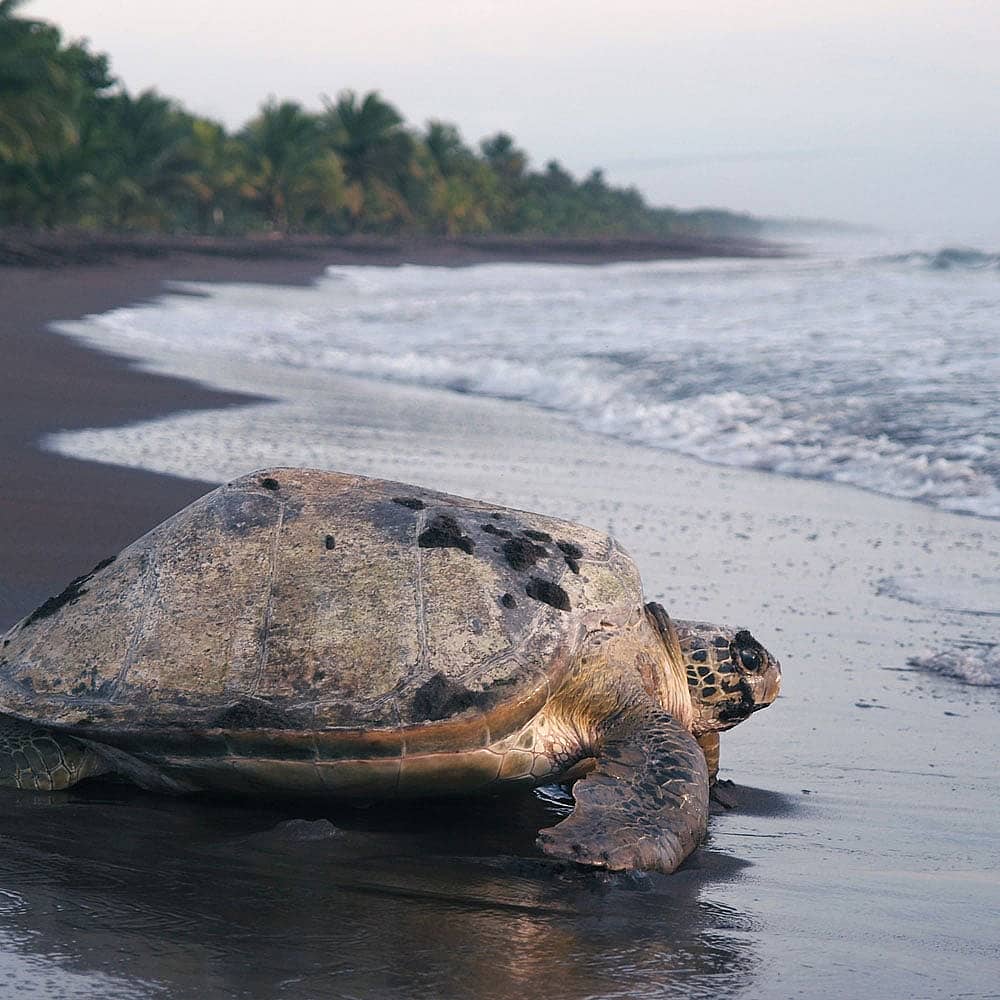
Other emblematic animals of Costa Rica include the white-faced capuchin, the leatherback sea turtle, the largest of all sea turtles, the sloth, often spotted by scanning the canopy, and the jaguar, an emblem of the rainforest.
 ©
©
What parrots can you find in Costa Rica?
Costa Rica is home to several colorful parrot species, including the most iconic: the scarlet macaw and the great green macaw, both known for their brilliant feathers. The scarlet macaw is often seen in Carara National Park and on the Osa Peninsula, while the rarer great green macaw lives mostly in the dry forests of the northwest, near Guanacaste.
You’ll also find smaller species such as the white-fronted parrot, Finsch’s parakeet, and the orange-chinned parakeet, which frequent dry forests and open areas, sometimes near villages.
 ©
©
What is the best time for birdwatching in Costa Rica?
The best time to watch birds in Costa Rica is from December to April, during the dry season. The weather is more stable, trails are accessible, and visibility is at its best. It’s also an ideal season for seeing both resident species and migratory birds from North America. That said, some regions, such as the Caribbean coast, offer remarkable diversity year-round.
Photo guide: how can you capture Costa Rica’s most beautiful birds?
Fiery-billed aracari, black-cheeked woodpecker, rufous motmot... The names alone spark the imagination. On a trip to Costa Rica, observing exceptional birds becomes an art of slow travel. For the best photos, go out at dawn or in the late afternoon, when the light is soft and the birds are active. Good to know: females are often darker than males.
Capturing the beauty of quetzals, toucans, or hummingbirds takes patience, and deep respect for their natural environment.
 ©
©
From toucans to hummingbirds, from cloud forests to mangroves, Costa Rica offers a constant show to those who take the time to look. Whether you choose a hike in Corcovado National Park or an adventure through Guanacaste’s remarkable parks, creating a trip with a local Costa-Rican English-speaking travel agency will connect you with the best guides to experience the country’s biodiversity in all its richness.