


11 things to do in Halifax
1. Stroll along the Waterfront Boardwalk
The wooden planks of the Halifax Waterfront Boardwalk lead straight into the soul of a city shaped by the sea, a longtime haven for fishers and sailors from around the world.
This nearly 2.5-mile coastal promenade follows the harbor from south to north. Along the way, explore seafood kiosks, the Halifax Seaport Farmers’ Market (open on weekends), artisan galleries, and lively patios filled with local energy. Settle into an Adirondack chair or stretch out in a waterfront hammock with a maple iced coffee in hand, and take in Halifax at a slow pace as ferries and sailboats drift by.
Don’t miss the Historic Properties, warehouses built in the 18th and 19th centuries and once used by privateers who helped bring wealth to the city. Folk singer Stan Rogers immortalized Halifax’s privateering era in his song “Barrett’s Privateers”. Just a few notes are enough to transport you to Halifax’s old wharves. The waterfront is liveliest from May through September, but the boardwalk is open year-round.
At the southern end of the Waterfront Boardwalk, you’ll find the Canadian Museum of Immigration at Pier 21, a national museum and the only one in the country devoted entirely to the history of immigration. Between 1928 and 1971, more than one million people passed through this pier on their arrival in Canada. The permanent exhibits retrace individual journeys and echo the story of nearby Lawlor Island.
At 1496 Lower Water Street, Alexander Keith’s Brewery is also worth a stop. Founded in 1820 by Scottish immigrant Alexander Keith, who was elected mayor of Halifax three times, it is one of the oldest working breweries in North America. Guided tours in period costume, tastings, songs, and reenactments make this spot a local classic that stays true to the city’s spirit.
A short walk from the waterfront toward downtown, at 2151 Brunswick Street, you’ll come across one of Halifax’s oldest homes, Akins House. Built around 1815 and designated a National Historic Site in 1965, it reflects the Cape Cod style of the Maritime Provinces, with wood shingles, dormer windows, and large brick chimneys. Thomas Beamish Akins, Nova Scotia’s first commissioner of public records, lived there from 1858 to 1891 and dedicated his life to preserving the province’s documentary heritage. It is one of the few early 19th-century buildings in Halifax to have remained almost intact.
2. Explore the Halifax Citadel
You can’t miss this star-shaped stone giant perched above the city, the Halifax Citadel, officially named Fort George. This fort is more than a city landmark, it is the quiet guardian of the region’s military past.
Head up for the “noon gun,” a tradition dating back to 1857 that still echoes through downtown every day at 12 p.m. sharp. Inside, local guides in period costume bring the daily lives of British soldiers during Queen Victoria’s 19th-century reign back to life, with reenactments, garrison drums, musket fire, and the smell of black powder.
From July through October, the Citadel offers a candlelit guided night tour called “Ghosts and Garrison.” A guide in period costume greets you on the drawbridge, then leads you by lantern through dim corridors, prison cells, and dark tunnels. For more than an hour, you’ll hear tales of the ghosts said to have haunted this hilltop since 1749.
As you head back down toward downtown, you’ll pass the Town Clock, commissioned by Prince Edward, Duke of Kent, and set in motion in 1803. Set into the slope below the Citadel, it is still working today.
Good to know:
- Between November 1 and May 6, the exhibit rooms and ramparts are closed, but the cannon still fires, except on Christmas Day.
- To see the changing of the guard and the noon gun, it’s best to arrive a little early, ideally around 11 a.m.
Your local agent can confirm the schedule so you can make the most of the experience.
3. Slow down in the Halifax Public Gardens
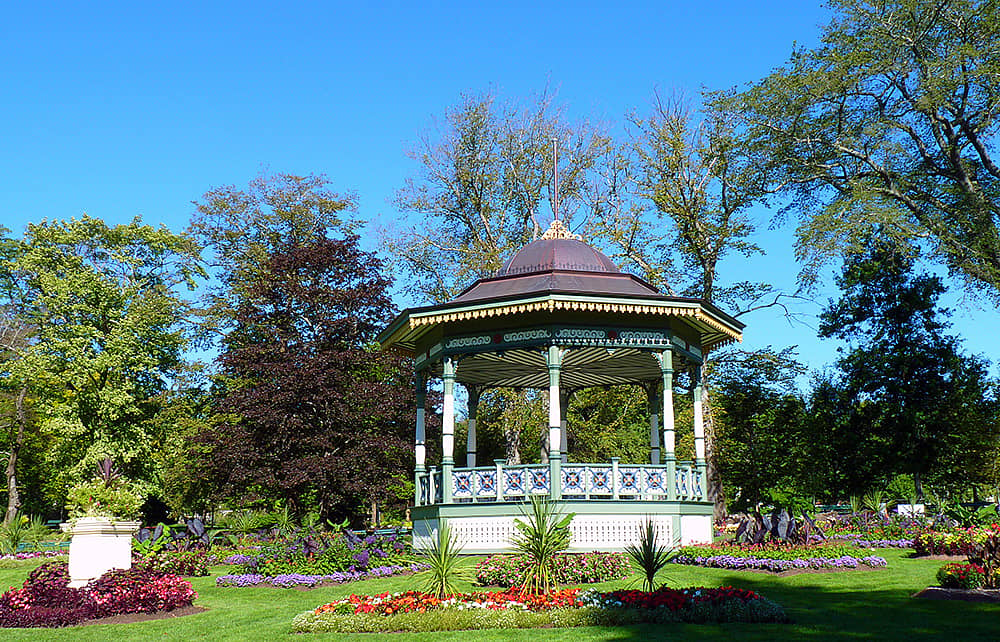
A hidden haven of calm awaits just off Spring Garden Road, the Halifax Public Gardens. Carefully designed in the Victorian “English garden” style in 1867, they are among the best-preserved Victorian gardens in North America.
Flower beds, a dahlia garden, trickling fountains, shaded groves, Roman statues, time really does slow down here. Halifax locals have made these historic gardens their own, coming to relax, picnic on the lawn, read on a bench by the pond, or spot ducks, always a favorite with kids.
When warmer days arrive, a small stage is set up near the garden’s bandstand. Free outdoor concerts take place every Sunday through the end of summer.
- In June, “Pollinator Week” invites kids and adults alike to join a guided treasure hunt through the flower beds with experts from the Halifax Museum of Natural History.
- In July and August, “Paint the Gardens” turns the paths into open-air painting studios, open to all levels.
- In early September, Dahlia Day is another favorite event for locals and passing travelers.
Practical tip: a five-minute walk from the Public Gardens brings you to the Halifax Central Library. It’s worth a visit, even if you’re only an occasional reader. Its architecture is striking, like a stack of glass boxes shifted and slightly rotated. Inside, the third floor is home to a First Nations Circle designed with the Mi’kmaq people, while the fifth floor has a rooftop terrace with panoramic views of the city. Admission is free.
4. Visit the Maritime Museum of the Atlantic
The Maritime Museum of the Atlantic is the largest maritime museum in Canada. Set right on Halifax’s waterfront, it tells the fascinating story of the ocean and the people who dared to cross it. Visitors move through key chapters of Atlantic history, from the age of sail and the arrival of steamships to small coastal boats, the Royal Canadian Navy, and World War II convoys.
Alongside a permanent exhibition on sailing ships, you’ll find large-scale models, immersive displays, films shown in a theater, and original period objects. The museum also preserves unique artifacts from the Titanic, including a deck chair, cabin lamps, and fragments of woodwork, displayed just steps from the harbor where the recovery ships returned.
The museum also has an exhibition on the Halifax Explosion, one of the least-known disasters in Canadian history. On December 6, 1917, the collision between the Mont-Blanc, loaded with nearly 3,000 tons of explosives, and the Belgian vessel Imo killed nearly 2,000 people and injured 9,000 more. It was the largest human-made explosion before the atomic bombs of World War II, and it remains deeply etched into local memory.
Halifax Harbor has a close connection to the Titanic. After the ship sank in 1912, the city became the base for body recovery operations. An estimated 150 victims were buried in Halifax cemeteries, including 121 at Fairview Lawn Cemetery in the North End, where you’ll find the well-known and heartbreaking grave of the “unknown child” from the Titanic.
5. Take the ferry to Dartmouth
For just a few dollars, you can cross the harbor and shift into a different atmosphere. The Halifax-Dartmouth ferry has been running since 1752, making it the oldest saltwater ferry service in North America. Originally, the route carried residents and materials to a sawmill in Dartmouth.
In the early days, there were no schedules and no real consistency. You simply showed up at the wharf and waited for the ferry, which ran from sunrise to sunset and cost three pence. In 1816, the first proper regular service was operated by a ferry powered by nine horses walking in circles on deck to turn the central paddle wheel, earning these early ferries the nickname “horse boats”. Steam power did not replace them until 1830.
The crossing takes about 15 minutes and offers one of the best views of the Halifax skyline and harbor. In Dartmouth, nicknamed the “City of Lakes,” continue exploring with a bike ride or walk around Lake Banook, a tasting stop at local microbreweries, or lunch on a patio facing Halifax.
The five ferries operating the crossing today are named after men and women who shaped local history:
- The “Rita Joe,” named for the Mi’kmaq poet and musician regarded as the poet laureate of her people.
- The “Vincent Coleman,” named for the railway telegraph operator who sacrificed his life during the 1917 Halifax Explosion to warn an approaching train.
- The “Viola Desmond,” named for the civil rights pioneer arrested in 1946 for sitting in a whites-only section.
- The “Craig Blake” and the “Christopher Stannix,” named for two local service members who died in Afghanistan, in 2010 and 2007.
6. Wander through the North End
Colorful houses, murals, record stores, thrift shops, and small, stylish cafés hosting rotating exhibitions and concerts, welcome to the North End. Here, the local arts scene has pride of place.
Agricola Street is the neighborhood’s culinary hub and one of the best places to eat in Halifax, though it is not the most obvious stop for visitors. In this lesser-known neighborhood, many restaurants take a thoughtful approach, using short supply chains, local ingredients, organic produce, and seasonal menus. In the evening, when they’re not at the rink, students, artists, and neighborhood residents gather in bars where bands play live.
And then there’s the Halifax donair, an icon of local street food. Named the city’s official food in 2015, it was invented in the 1970s by Peter Gamoulakos, a Greek immigrant. It is not a gyro, and it is not a döner kebab. Spiced beef is cooked on a vertical spit, served in pita bread with onions, tomatoes, and a sweet sauce made with condensed milk. It’s so tied to Halifax that you’ll rarely find the real thing outside Canada.
Among the Halifax institutions serving donairs, “King of Donair” and “Tony’s Famous Donairs” have been competing for the title of best in town for decades. We’ll let you be the judge.
7. Hike in Point Pleasant Park
At the southern tip of the peninsula, Point Pleasant Park is Halifax’s green lung. Here, you’ll find 185 acres of coastal forest and walking trails, with varying levels of accessibility. Locals come for an early morning run, to walk their dogs, picnic with friends, or watch sailboats pass on the Atlantic.
Marked trails wind through tall trees, opening onto ocean views. As you walk, you move between the shade of the forest and open lookouts. You can also use the hike as a chance to take a dip or pause with your feet in the water on the pebble shore of Black Rock Beach. Point Pleasant Park is also an ideal family outing. You may spot deer, squirrels, and many birds, and reconnect with your inner child along the way.
Along the shoreline, you’ll come across the ruins of military fortifications that defended Halifax Harbor until the end of World War II. Fortified shelters, gun emplacements, old bunkers, it can be surprising to encounter so many traces of Canada’s military history in a city park. These remains are threatened by coastal erosion, which eats away more than 1.5 feet of shoreline each year. The Halifax municipality has invested in preserving the site before it is too late, so its past is not swept away by the waves.
Halifax and the surrounding area make a wonderful gateway for hiking in Canada before you head off to explore wilder terrain.
8. Explore McNabs and Lawlor Islands Provincial Park
Southeast of Halifax Harbor, set your course for nearby McNabs and Lawlor Islands. Together, they form a quiet provincial park where nature has taken over and history, often forgotten, still carries weight.
McNabs Island is the larger and more accessible of the two. It has 990 acres of forest, marshland, and shoreline, about 25 minutes by boat from downtown. Exploring it feels like heading off the beaten path. On McNabs Island, there is no cell service, no drinking water, and no emergency services. You are on your own, or close to it.
Trails wind between red maples, beeches, and century-old spruces, skirt salt marshes, and lead to the ruins of Fort McNab, Halifax’s first fortification equipped with long-range guns. A total of 206 bird species have been recorded on the island, an important stopover for migrating birds. And birds are not the only wildlife here. Around a bend in the trail, you may easily spot curious white-tailed deer, rabbits, or coyotes. Vegetation has largely reclaimed the abandoned military posts, some of which are now almost completely hidden beneath moss and ferns.
Practical tip: bring enough water for the day, plus food. A camping area is available on the island, but campfires and alcohol are not allowed. Ask your local agent about best practices if you’re planning to explore McNabs Island.
Lawlor Island carries a heavier story. From the late 19th century to the mid-1930s, this was the site of Halifax’s quarantine station, a required waiting point for thousands of immigrants crossing the Atlantic. In January 1899, the SS Lake Superior docked in the harbor with 2,000 Doukhobors on board, members of a Russian Christian community fleeing religious persecution and making their way to western Canada.
Suspected of having smallpox, they were quarantined on the island. Halifax carpenters refused to come build there for fear of contagion, so the Doukhobors had to construct the missing buildings themselves before continuing their journey.
Good to know: Lawlor Island is now protected under provincial heritage site legislation and is not open to the public. You can approach it by boat from Eastern Passage. A kayaking trip along its wooded shores, where great blue herons and ospreys nest, is enough to feel its atmosphere. Your local agency can explain the available options so you don’t miss this site, or this chapter of Canadian history.
9. Take in culture at the Art Gallery of Nova Scotia
Located in downtown Halifax in two renovated heritage buildings connected by an underground level, the Art Gallery of Nova Scotia is the largest art museum in Atlantic Canada.
Its permanent collection includes more than 19,000 works, paintings, sculptures, photographs, ceramics, and folk art. It’s the perfect place to dive into local creativity, from Indigenous works and contemporary art to marine painting.
You’ll discover works by watercolorists and painters, along with programming that shines a light on local artists and the region’s Indigenous nations. But the museum’s centerpiece remains the home of Maud Lewis, a folk artist beloved by Canadians and a true regional icon. Reassembled exactly as it was inside the museum, the house celebrates her bright, joyful world, an invitation to see life in color.
Who was Maud Lewis? Born in 1903 near Yarmouth, Nova Scotia, Maud Lewis lived with juvenile rheumatoid arthritis throughout her life. She had no formal artistic training. She spent more than 30 years in a tiny house in Marshalltown with no running water or electricity, alongside her husband Everett, a traveling fish seller. Her mother taught her to paint Christmas cards to sell, and that is how her career began. Maud eventually covered every inch of the house with deer, birds, cats, and brightly colored winter landscapes.
After her death in 1970 and her husband’s in 1979, the house began to deteriorate. Residents from the Digby area rallied to save it, and in 1984, the province of Nova Scotia purchased it and entrusted it to the Art Gallery of Nova Scotia, which restored it and installed it as a permanent exhibition. In 2017, the Canadian film “Maudie” brought her story to audiences beyond Canada.
10. Listen to live music in a pub
In Halifax, music is a passion passed along naturally, often from table to table, between a pint of local beer and a fiddle by the fire.
City pubs like The Old Triangle and Durty Nelly’s are local institutions, where any evening can turn into a lasting memory, with Celtic folk, Acadian tunes, or sea shanties. You step in for a drink, then stay for the atmosphere, the easy conversations, and that lilting Maritime accent that lingers in your ear.
Here, musicians often set up on a small stage in the corner and play live while the crowd sings along. It’s an authentic experience that requires no ticket and no reservation, but one you’ll remember. Push open the door, settle in, and see where the night takes you.
On the events calendar: if your trip falls during the summer season, Halifax has music gatherings worth planning around. One of them, the Grou Tyme Festival, often held in mid-August, celebrates the richness of Acadian heritage. Traditional music and dance, local food stands, it’s a wonderful way to connect with a culture often overshadowed by the city’s English-speaking history.
11. Spend half a day in Peggy’s Cove
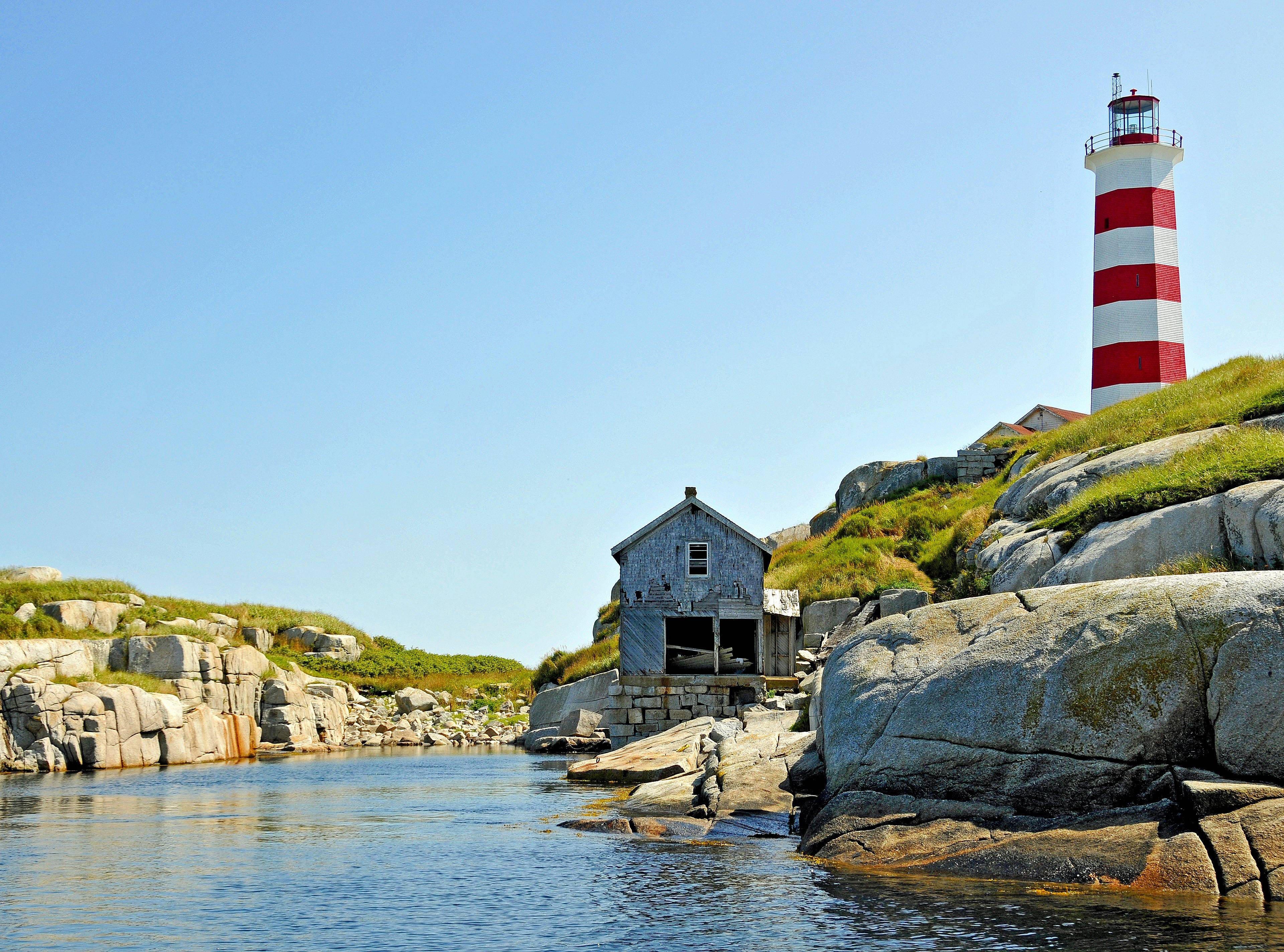
About a 45-minute drive from Halifax along Nova Scotia’s South Shore, Peggy’s Cove is one of the most photographed fishing villages in Canada.
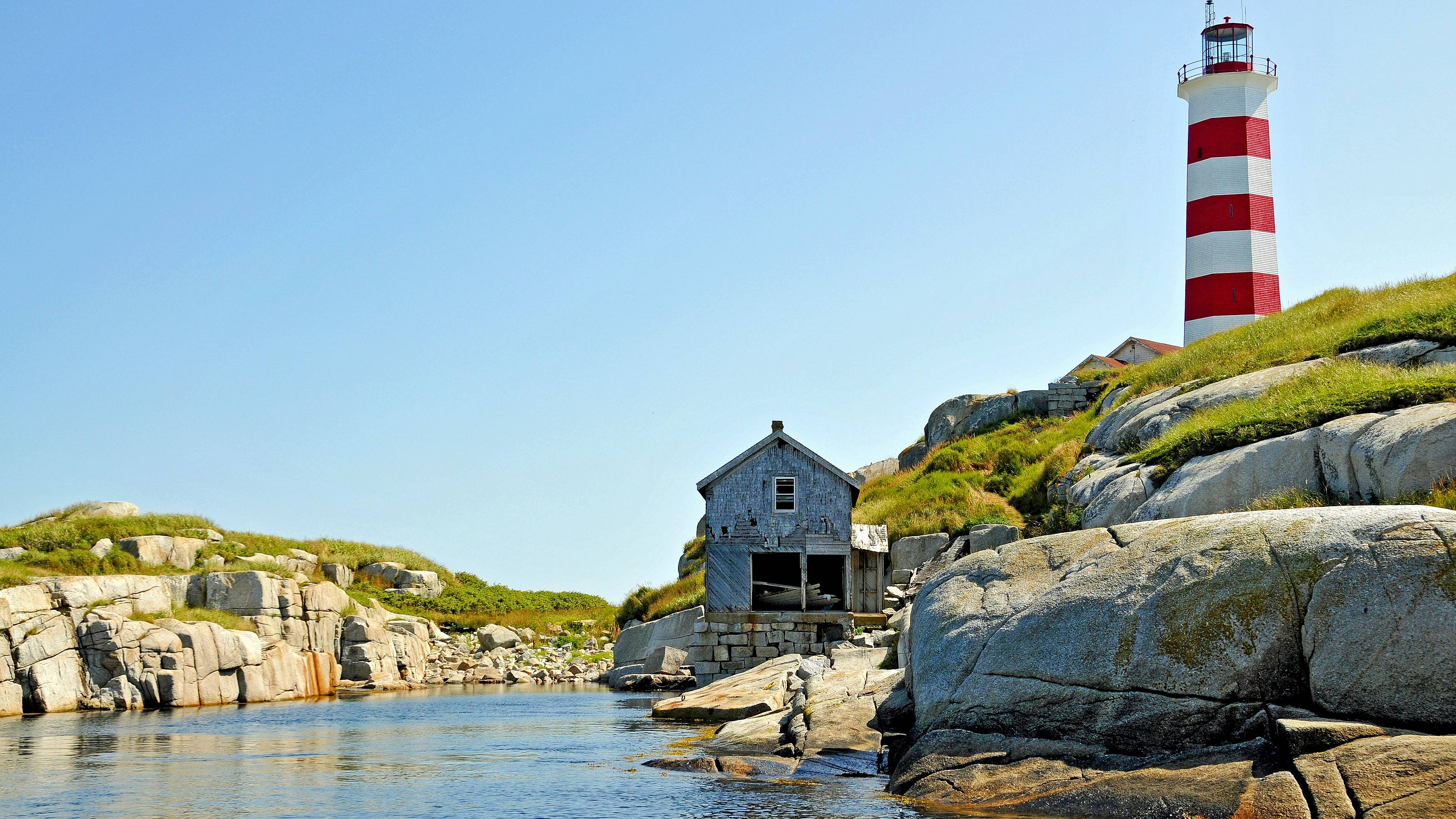
The village has around 30 year-round residents, colorful wooden houses, lobster traps stacked on the wharves, and a red-and-white lighthouse set on a dramatic sweep of granite boulders, one of the country’s most iconic views. The village dates back to the early 19th century, and its first residents were fishers of German origin, settled there by the British Crown.
Leave early in the morning to avoid the crowds, which often arrive by midmorning. Once there, you’ll often see painters and watercolor artists set up on the rocks to sketch harbor scenes. It’s a local tradition that began decades ago.
Be sure to stay on marked paths and watch your footing on the rocks, as the granite can be slippery, even in dry weather, and waves can rise without warning.
Farther down the coast, every February, the “Nova Scotia Lobster Crawl” celebrates lobster. Lobster roll competitions, chowder tastings, boat outings with local fishers, live concerts, it’s a dream opportunity to discover the region in the off-season, right at the heart of local life.
A February stay fits naturally into a trip through Canada’s Maritime Provinces.
Make Halifax a stop on a tailor-made trip to Canada
With Evaneos, you plan your trip to Canada directly with a local, English-speaking agent based in the destination. Halifax, Nova Scotia’s red cliffs, Ontario’s forests, the whales of the St. Lawrence, they know every corner of the country, from the seasons and lesser-known places to the best local spots.
These experts guide you step by step to build a fully personalized itinerary that fits your interests, far from standardized tours.